ENGINEERING CASE STUDY · PUBLISHED
Feeding Tube Fouling Characterization
Evaluating a silica nanoparticle coating designed to reduce feeding-formula buildup and tube blockage.
Clinical challenge
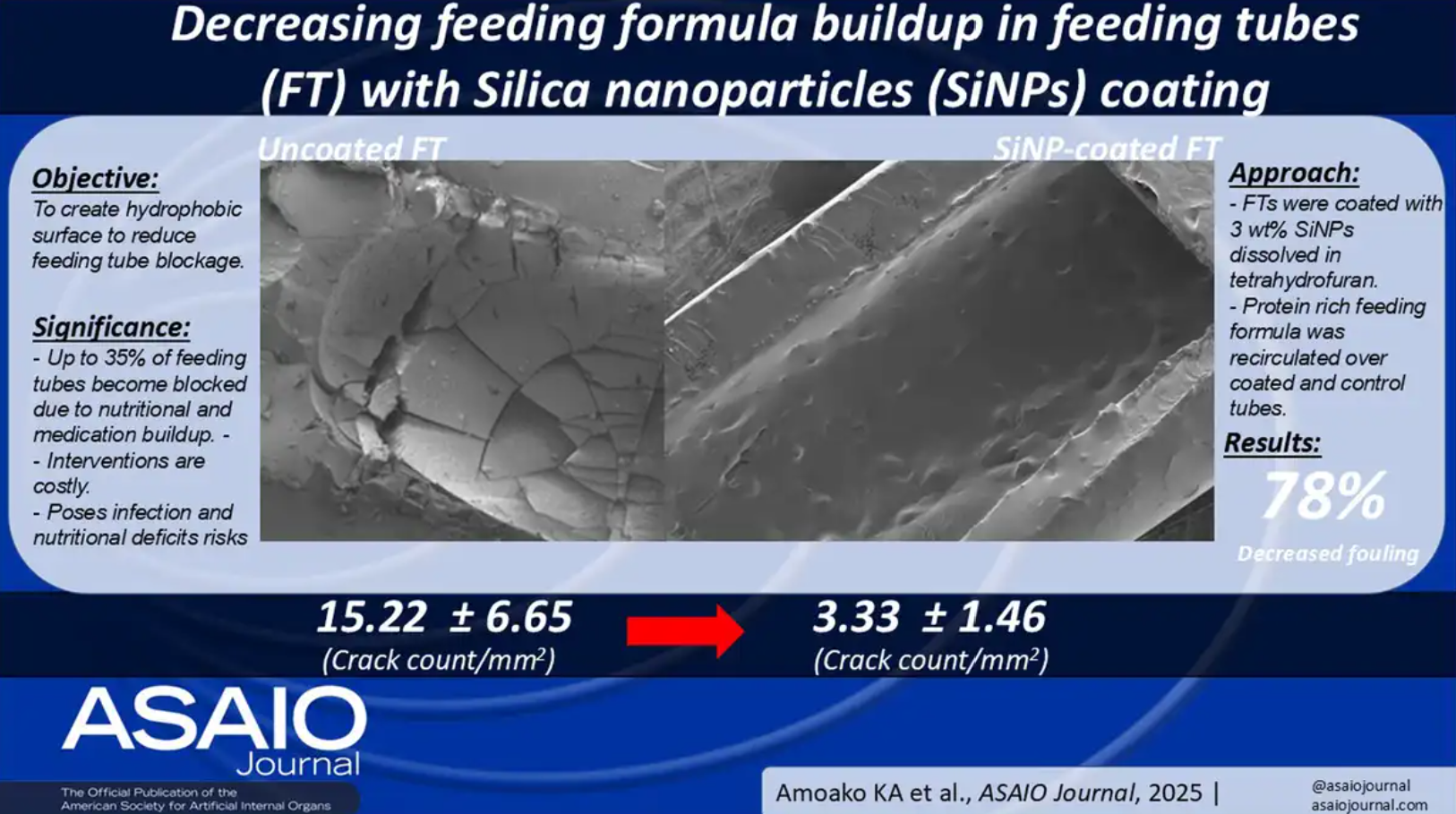
Feeding tubes can become blocked by nutritional formula and medication buildup, creating risks of interrupted nutrition, infection, and costly clinical intervention. The study investigated whether a hydrophobic silica nanoparticle surface could reduce this fouling.
Research approach
Feeding tubes were coated with a 3 wt% silica nanoparticle formulation in tetrahydrofuran. Protein-rich feeding formula was then recirculated through coated and uncoated control tubes, and the resulting internal surfaces were characterized to compare buildup.
Key result
The silica nanoparticle-coated tubes showed a 78% reduction in fouling. Surface crack density decreased from 15.22 ± 6.65 to 3.33 ± 1.46 cracks/mm², supporting the coating as a promising approach for limiting feeding-formula accumulation.
My role
Co-author and research contributor within the University of New Haven biomedical engineering team. The published paper credits Santiago Andres Proano Patino as an author affiliated with the Department of Chemistry and Chemical and Biomedical Engineering.